

Our Approach

Most SaaS companies believe they have structure because they follow Agile.
But delivery frameworks are not operating models.
Operating models define how decisions are made, how trade-offs are resolved, and how complexity is absorbed as headcount grows.
When that layer is undefined, strong individuals compensate — until scale makes compensation unsustainable.
We make that invisible layer explicit.
We Diagnose, Design, And Codify The Structural Layer That Governs These Dimensions:
Dependency Architecture
Ownership Seams
Escalation Pathways
Incentive Alignment
Decision Rights

Structural Debt Forms Across 5 Dimensions
Structural Debt Accumulates When Growth Outpaces Architectural Design.
Authority is implied, not explicit.
Critical paths rely on informal negotiation.
Incentive Alignment

Escalation Pathways
Compensation is rewarded more than clarity.
Leadership becomes the coordination layer.
Dependency Architecture

Decision Rights
Ownership Seams
Accountability blurs across teams.

Structural Debt Requires Explicit Diagnosis
For SaaS organizations navigating these patterns, an operating model diagnostics provide the first layer of clarity before structural redesign begins.

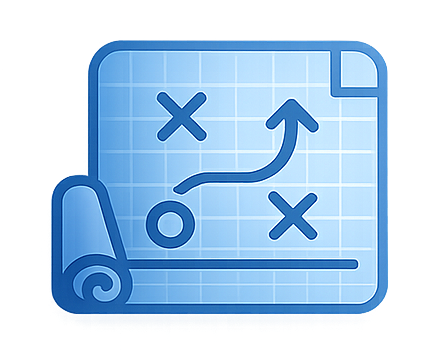

An Operating Model is Structural Discipline

Decision Architecture
How are meaningful trade-offs made?
Who decides under tension?
What are the thresholds for escalation?

Authority & Accountability
Does ownership match decision authority?
Where does escalation gravity concentrate?
Can decisions be made safely one layer down?

Coordination Design
How are cross-functional dependencies surfaced before commitments are made?
Where do seams slow execution?
How does the system behave under load?

Trade Offs Logic
How are competing priorities resolved?
Revenue vs roadmap.
Speed vs stability.
Short-term vs long-term.

Incentive Alignment
What behaviors does the system reward?
Do metrics reinforce collaboration — or conflict?
If you’ve never explicitly defined how authority, trade-offs, and coordination are designed — then your operating model has evolved by habit, not intention.
That works… until it doesn’t. The first step isn’t transformation.
It’s diagnosis.
Most structural friction becomes obvious once the architecture is made visible.
That’s what we help leadership teams do.